“Growing Older, Staying Well!”:
A Write Up of a Public Talk (ft. Dr. Bharathi Vengadasalam)
It’s ironic that when we were younger, when none of us has the freedom that we so often observed in adults, that we long to grow up faster, but as soon as we hit the age of 23-24, when most of us have either graduated from colleges or finished their internships at a small company or get married, we look back on our younger selves and say, “Why the hell did I wish for all of this? This is not what I wanted.” Contrary to what Uncle Ben said, it is not great power that comes with great responsibilities, it is the freedom that comes along as we grow up and mature… and the fact that we need to pay bills and give a small sum to our parents and daily expenses such as food and petrol and parking fees and fines when we can’t manage to find a parking space and are forced to double park since generally there are not remotely enough spaces to accommodate our ever increasing car population(!). But I digress.

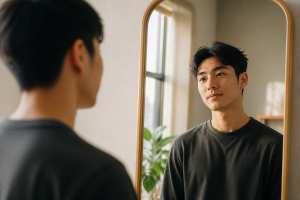
Adapted from http://az616578.vo.msecnd.net/
Growing up is hard, although this entirely depends upon our mental preparation for its inevitable arrival. Some took it easy and the process at which they adapt to their maturity is swift and fluid, while some find it hard to believe that they need to start thinking about their future instead of how to convince their moms to buy an XBOX for Christmas. And I would argue the same applies to growing old as well, a process that seems even more daunting because of the physical and mental deterioration that we typically associate with aging. But unlike adulthood, which is what we usually think of as the peak of our lifetime, the culmination of what we have been doing up till that point of life, senior citizenship is typically looked upon with negative (albeit sometimes indirect) connotations: senility, lack of work, deterioration, sickliness, vulnerability, and ultimately death. Why is that? Does aging really cripples a person?

Dr. Bharathi Vengadasalam
What Dr. Bharathi Vengadasalam argued in a public talk for Befriender’s KL titled “Growing Older, Staying Well: Mental Health for Seniors” is that while, yeah sure, to be fair, the physical aspect of aging is most probably inevitable, that we will get increasingly frail as the days go by, we can do something to slow down this process and lead a healthier and more productive old age if we have the proper mental preparation to face these irreversible changes. And the crucial preparation being the acceptance of the need to change our lifestyle according to the aging process, adapting and not stagnating and fixating in a single style of living once we hit the age when we usually retire. While at the same time, we must be prepared to let go of those things that we can’t change, such as death and the loneliness that comes with the death of a loved one. In short, a healthy dose of stoicism is crucial in order to age well.

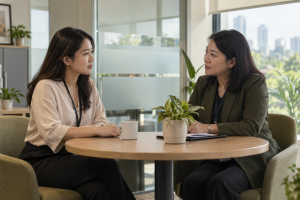
Adapted from http://static1.squarespace.com/
There are multiple ways that we can change our lifestyle as we age so that we can age in a much more healthy way. For one, exercise, be it through cardiovascular exercises or strength based exercises, or even mind-body exercises (stress management, and mental strength). Or having a healthy diet consisting of food rich in protein and the proper types of fats (seafood), as well as having the right kind of sugar to combat cholesterol, diabetes and obesity. A diet consisting of whole grains, berries or nuts helps too, and turmeric helps in the anti-oxidation process of our body.
We can also lead a very active social life once we retire, so that we won’t stagnate and stay sedentary in our own homes. Having a wider social circle is helpful, since as you age, one of the cruelest incidence is having to witness a close friend or family member went through sickness and death, and to have more friends will lead to a decrease of loneliness. Which brings us to another important point: have hobbies, or post-retirement activities and goals. Hobbies and activities lends purpose to our life, keeps us moving and going forward, and negates the harmful effects of a sedentary lifestyle.
You will notice that what I have said thus far are very common knowledge and facts, and has been around for a long time. And they are in fact common sense! But the thing is that we are also very prone to ignore these facts and continue living an unhealthy lifestyle, maybe due to laziness or neglect. Sure, we know that exercising and having a healthy diet is great and all, but knowing about it and actually getting up and doing it are two very different things, and we can know about important facts up until the last moment of our lives and still regretting the fact that we never had a chance to perform it.

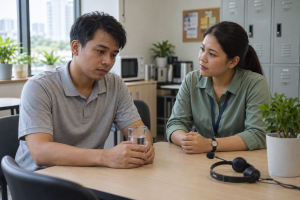
Adapted from http://az616578.vo.msecnd.net/
“There are no magic bullets,” Dr. Bharathi says at one point in her talk, and all around me I can see people well into their twilight years, and some just about to enter that transition from adulthood to seniority. All heads are high, and full of expectation and liveliness, despite their age. There is an old lady sitting at the front row, hair as white as snow, but still asking questions with a booming voice, and when others were providing points and counterpoints in discussions, she turned back and looked at us with enthusiasm in her eyes, as if age is nothing but a temporary obstacle to be conquered. And at that moment, Dr. Bharathi’s rhetoric rings especially true, there are no magic bullets, we just have to wing it.

Adapted from http://static1.squarespace.com/
Note:
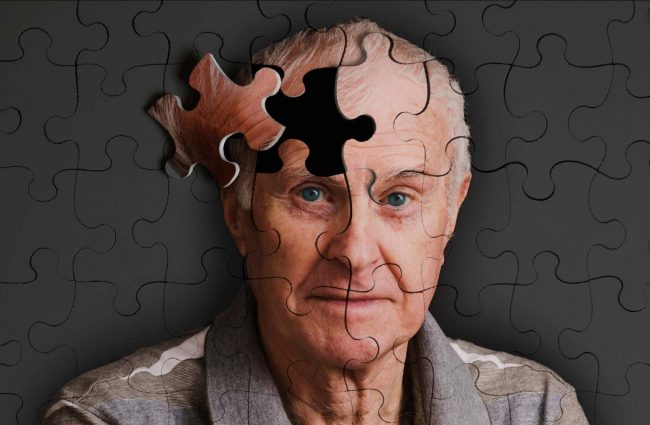
(There are discussions regarding one of our biggest fears that is typically associated with aging, and that is Alzheimer’s disease or just dementia in general. Though this very frightening form of dementia most commonly occurs in seniors, it is NOT a normal part of aging, and one can certainly reduce the chances of developing Alzheimer’s through the above suggestions, by constantly stimulating our mental capabilities with hobbies (preferably outdoors and involves socializing), and leading a purposeful life, as well as exercises and a healthy diet to keep our body refreshed and energized. Remember, mind and body exist as one, and an imbalance in one aspect can lead to a disruption on our well being.
The other fear being depression in older people. And since depression can occur in four different forms: behavioral (e.g. lack of movement), cognitive (e.g. a more narrow perspective on events), emotional (e.g. constant sadness), and physical (e.g. body pains), the counter to depression would also have to be based upon these four aspects.)
Follow us on:
Facebook – https://www.facebook.com/mypsychologychannel/
Instagram – https://www.instagram.com/mypsychologychannel/