Giving Voice to the Non-Verbal: Caring For Children with Autism
From my previous Applied Behaviour Analysis (ABA) practice, I have been trained on how to care for and to love children with autism. Although they may not be the typical kids you see at the playground, they are certainly lovable as they are. In my experience, I have seen how different children interact with their surroundings each in their unique communicative ways. Sadly, our lack of understanding often causes them feeling frustrated when their needs are unmet.

Adapted from: http://www.derekhuether.com/
The percentages of children with autism who are non-verbal remain unclear, but 2005 research(1) showed that 25% of children with autism have language difficulties . Our understandings of ‘non-verbal’ can be vague. Some children use body language or other physical signs to communicate while others use a few words to communicate. However, instead of using complete sentences, minimally verbal children often use limited and repetitive words to communicate with others. For example, Lily wants a ball from another child. Instead of saying “Can I have the ball, please?”, she might just say “ball” as she reaches out her hand to the friend. There are others who might express themselves through simple words such as a “No” or a “Yes” verbally, but their words might sound slurred and be unclear to others.

Adapted from: https://62e528761d0685343e1c-f3d1b99a743ffa4142d9d7f1978d9686.ssl.cf2.rackcdn.com
Visual aids can be a great prompter for children who are struggling with speech. Simple words can be written on flashcards to help the child in identifying and recognising the term. We could teach children how to connect words to their surroundings by showing them sets of pictures while labeling them clearly and speaking the words slowly. If they make any sounds while pointing or holding the object, acknowledge the child and name the object with the right term. For example, if Peter is pointing at a ball beside you, you should pick it up and say “ball” before handing it to Peter. Make eye contact with Peter to get as much attention from him as possible. Say the word ‘ball’ clearly to him with an obvious consonant /b/ sound. Prompting is often used to support the child in their learning. The verbal prompting should be used less often as the child starts to progress in their learning ability. It is important to give a non-verbal child encouragement instead of rushing them to learn a skill. They need time to absorb your teachings.

Adapted from: esl-kids.com
Body language can be a stepping stone for language development. Pointing and clapping are two interaction efforts the child used toward their surroundings: they point to show that they are interested in a certain thing at a direction while they clap to show that they are happy with the current situation. We should acknowledge their body language as their communication method to us, and teach them corresponding gestures to interact with others. For example, wave when you say “Hi” or shake your head to say “No”. Show them the gesture as clearly as possible for them to learn and follow, use simple words (not long and complicated instructions) to label the gesture you are demonstrating to them.

Adapted from: https://suchakumesh.files.wordpress.com
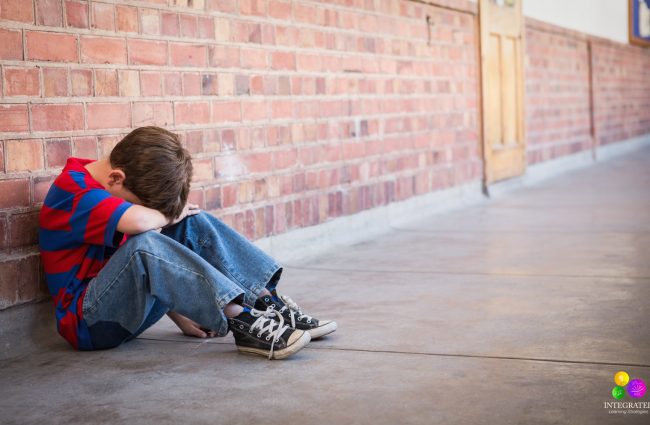
Teaching a non-verbal child does take great patience and efforts. Nonetheless, they need guidance and encouragement to gain meaning in life. Rushing them off to master a skill will only stress the child, and in worst case scenarios, they might just shut themselves off from the world. As a society, it is our responsibility to equip ourselves with the knowledge of the challenges a non-verbal child faces in life. Lacking the understanding of these loving children only leads us to being judgmental and critical towards them and their family.

Adapted from: http://www.catholicgentleman.net/
To conclude, I would like to quote what Philip, a non-verbal 13 years old boy, wrote in his blog “No person should be without a voice. My parents have been great. Love is felt when you are accepted. Love is felt peacefully when you are no longer seen by your momentary deficits but by your attributes that make you a complete person.”(2)
References:
- Tager-Flusberg H, Paul R, Lord CE. Language and communication in autism. In: Volkmar F, Paul R, Klin A, eds. Handbook of Autism and Pervasive Developmental Disorders. Vol 1. 3rd ed. New York: Wiley; 2005:335-364.
- Philip (2015, April 2). World Autism Awareness Day 2015 [Web log post]. Retrieved from http://faithhopeloveautism.blogspot.my/2015/04/world-autism-awareness-day-2015.html
Follow us on:
Facebook – https://www.facebook.com/mypsychologychannel/
Instagram – https://www.instagram.com/mypsychologychannel/