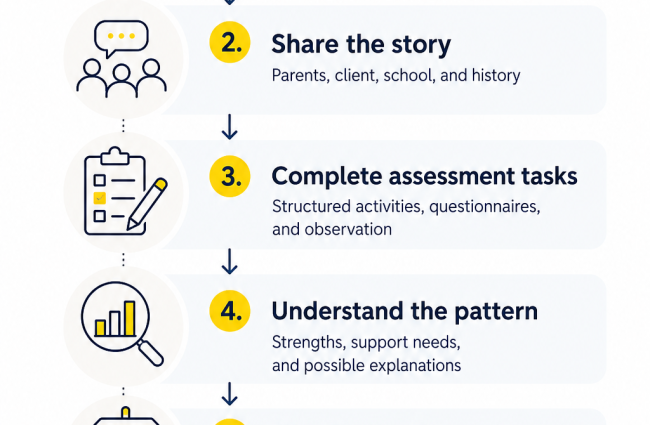
In this article 7 sections
Thinking about a psychological assessment can bring up plenty of questions. What will I be asked? Will my child feel nervous? Do I need to know which test to book? Am I committing to a whole assessment straight away?
At MY Psychology, the starting point is an initial consultation to understand your concerns and consider what may help. Further assessment depends on the questions being explored and the psychologist’s recommendations.
You can begin by describing what has been difficult, even if you are unsure how to explain it. Here is what the process may involve, from that first conversation to discussing the findings.

Caption: A psychological assessment usually begins with a conversation. The psychologist gathers background information, listens to the main concerns, and tries to understand the person in context.
1. Start with a conversation about your concerns
During the initial consultation, the psychologist will ask about the difficulties you have noticed, when they began, and how they affect everyday life. The discussion may include development, learning, work, relationships, emotional wellbeing, sleep and relevant health history.
For an adult, this might mean exploring why deadlines keep slipping or why ordinary routines feel difficult to manage. For a child, it might involve understanding concerns about homework, attention, behaviour or learning.
The psychologist will also ask what you hope to understand. Perhaps you want to know whether ADHD could be relevant, whether a learning difficulty needs exploring, or what kind of support would be appropriate.
You do not need to arrive with a diagnosis or a polished explanation. If you lose your train of thought, notes can help you return to what you wanted to say.

Caption: Some assessment sessions include forms, questionnaires, or digital tools. These help the psychologist collect information in a more structured way.
2. Prepare a few examples and questions
Preparation can be simple. Before your appointment, it may help to note:
- Two or three situations that have been difficult, and what happened.
- Roughly when you first noticed the pattern and where it occurs.
- What you have already tried, including anything that helped.
- The questions you most want answered.
For example, “I forget things” becomes more informative when you describe missing appointments despite reminders. For a child, a specific example from homework or a teacher’s feedback can help explain the concern.
Previous assessment reports, relevant school records or health information may also be useful if available. What is needed varies, so ask the centre which documents to bring and who should attend. If records are missing, mention this so the psychologist can advise what information may be needed.
3. Understand the proposed next step before further testing
The initial consultation helps the psychologist consider whether further assessment is appropriate and what it should explore. Depending on the concern, another form of support or a referral may be recommended instead.
For ADHD assessment at MY Psychology, the recommended scope, tools, sessions, expected timeline and written quotation are discussed before testing begins. A written report is included when it forms part of the agreed scope.
This is a useful point to ask:
- What questions will the assessment help us explore?
- Why are these particular tools or sessions recommended?
- What do the quoted fees include?
- Will there be a written report and a feedback session?
- What happens after we receive the findings?
The initial consultation and any further assessment are separate stages. You can discuss the recommendation and costs before deciding whether to proceed with the proposed assessment.

Caption: Some tasks may involve timed activities, problem-solving, memory, attention, or learning-related tasks. The goal is not to pass or fail, but to understand how the person processes information.
4. Assessment may involve several kinds of information
If you proceed, the process is tailored to the person’s age, concerns and assessment purpose. It may include interviews, questionnaires, rating scales, observations or structured tasks.
Some tasks explore areas such as attention, memory, learning or problem-solving. Others gather information about behaviour and daily functioning. Not everyone needs the same tools, and a computer-based task is not a routine requirement for every assessment.
Where relevant, the psychologist may discuss gathering information from a parent, teacher or another person who knows you well. Different perspectives can help explain why a difficulty is more noticeable in one setting than another.
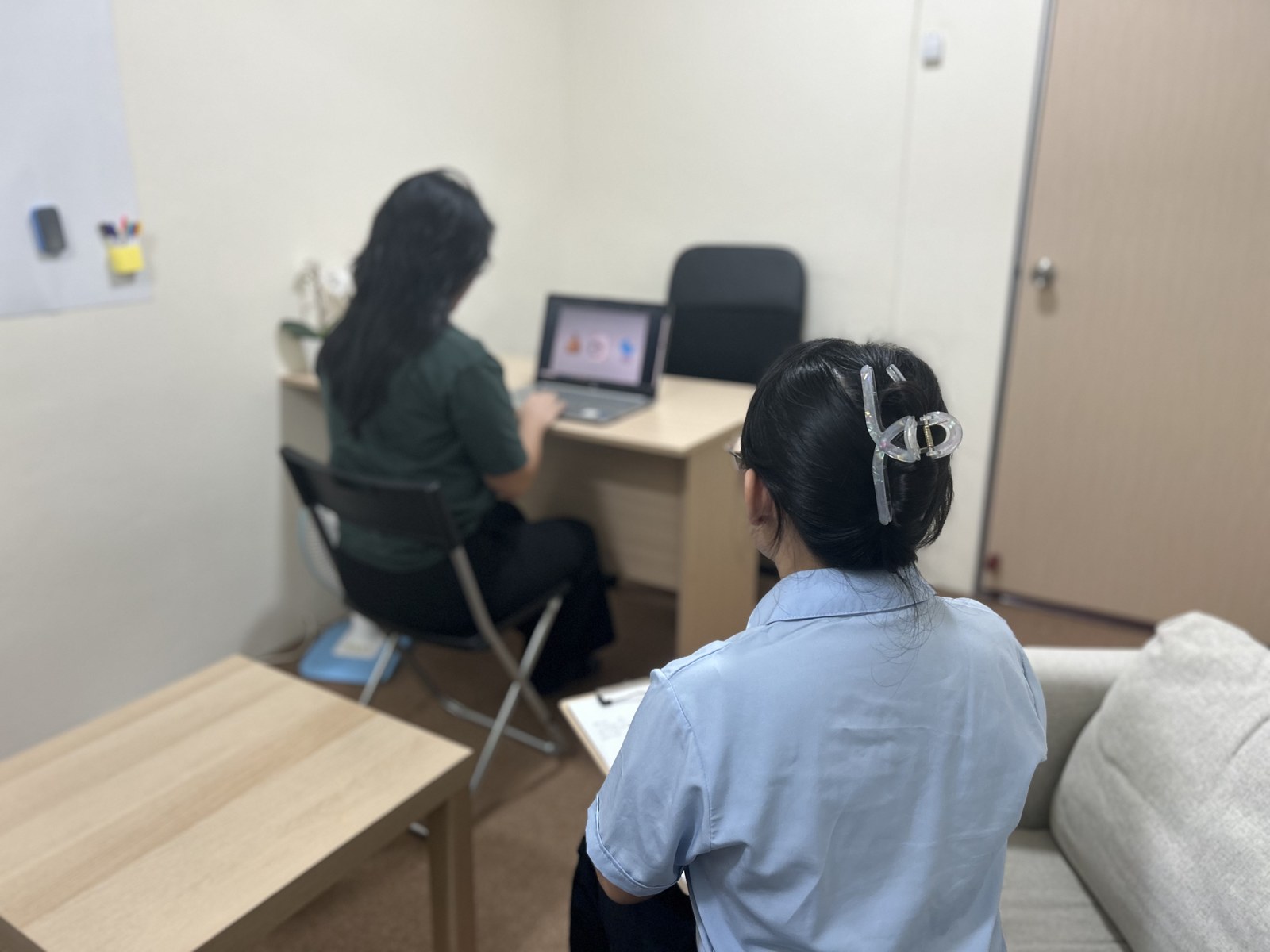
Caption: Attention-related assessments may include computer-based tasks in a quiet room. The psychologist observes performance together with the wider clinical picture.
For ADHD, no single test establishes the diagnosis. History, functioning and other possible explanations all matter; sleep problems, anxiety and learning difficulties can sometimes produce similar concerns. CDC: Diagnosing ADHD
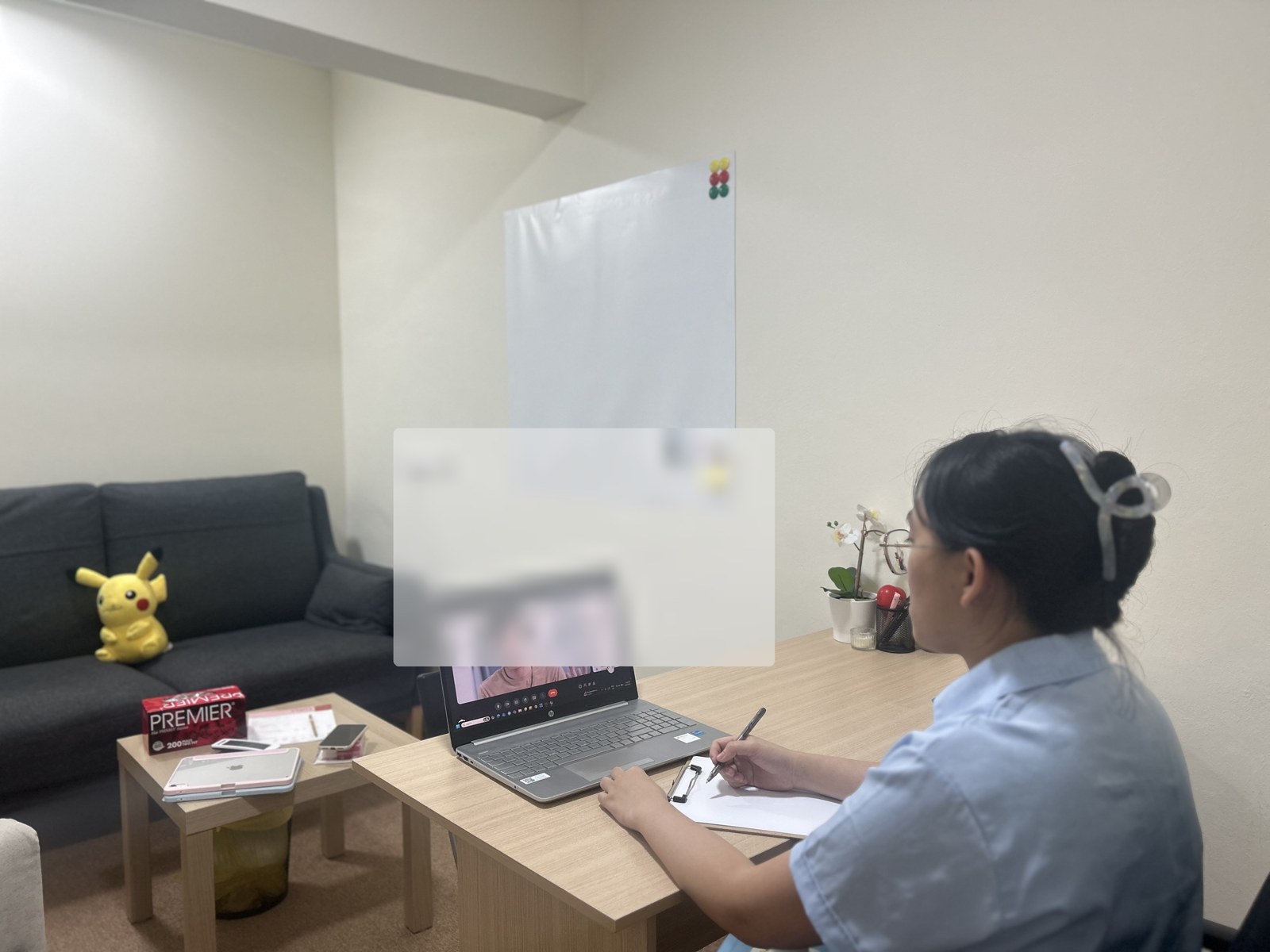
Caption: Some early screening or information-gathering steps may be completed online. This can make the process easier for clients who need an initial discussion before deciding the next step.
5. Ask about the format and timing
Some interviews or information-gathering steps may be suitable for an online appointment. Other parts may need an in-person session. The psychologist can advise which format fits the assessment being considered.
The number of sessions and time needed to complete the process also vary. If travel, school, work or a deadline matters to you, raise this when discussing the plan so expectations can be clarified before further appointments are arranged.
6. Discuss the findings and what they mean
After gathering and interpreting the information, the psychologist explains the findings and their implications for everyday life. This may include strengths, difficulties, possible explanations and recommendations for support.
When a written report is part of the agreed scope, it brings together the relevant findings and recommendations. You can ask what the terms mean and which suggested steps to prioritise.
The findings may support a diagnosis, suggest a different explanation, or indicate that more information is needed. If ADHD is not identified, that does not make the difficulties you described unimportant. The discussion can still help clarify appropriate next steps.
Recommendations may involve changes to routines, learning or workplace strategies, therapy, or referral to another professional. Assessment helps guide these decisions; any ongoing support is discussed separately.
Considering assessment for yourself or your child?
You can start with the concern you have today. The first conversation helps clarify what needs exploring and whether further assessment is a suitable next step.
If your questions relate to attention, organisation, restlessness or impulse control, explore our ADHD assessment service for children, teens and adults. You will find the initial consultation details and how the assessment plan is discussed.
Explore ADHD assessment and the first consultation →
For other concerns, explore our psychological assessment services.