
In this article 7 sections
“My child can spend ages on a favourite activity, but homework needs constant reminders. Could it still be ADHD?”
Or perhaps the concern sounds different: your child sits quietly in class, yet often loses track of instructions, forgets school materials or leaves work unfinished.
These experiences can leave parents unsure what to make of a comment such as “cannot focus”. They are useful starting points for a conversation, but they do not establish a diagnosis. ADHD assessment looks at the child’s development, everyday functioning and experiences across settings to understand what may be contributing.
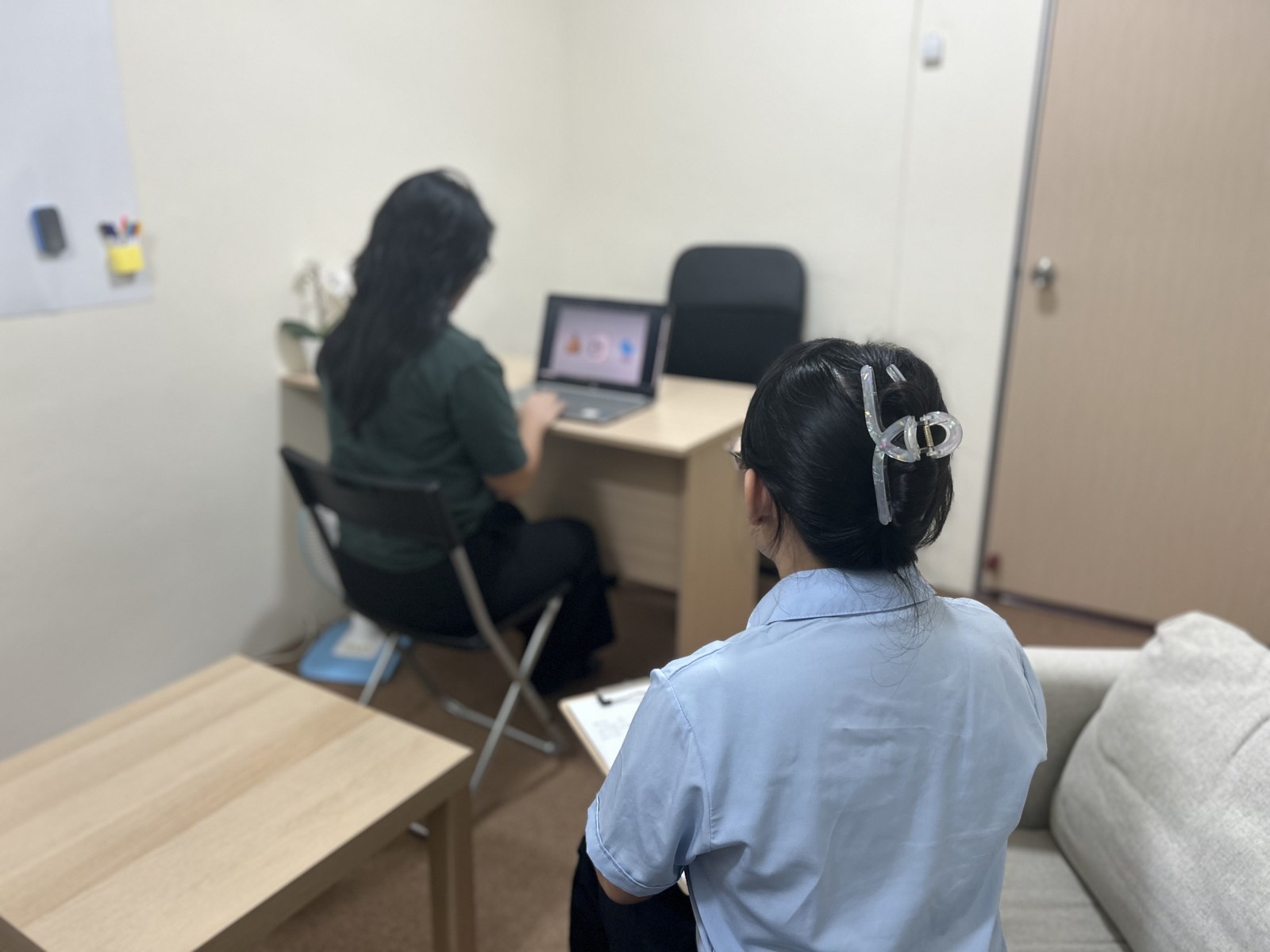
Computer-based tasks may be used where appropriate. Results are considered alongside history, observations and everyday functioning.
1. “But my child can focus on things they enjoy”
Being absorbed in a favourite activity does not, by itself, settle whether a child has ADHD. Equally, struggling with homework does not automatically mean ADHD.
It is more useful to describe the circumstances. Does the child work differently with one-to-one support? Are difficulties more noticeable during reading, written work, group instructions or the evening routine? What happens when a task becomes longer or less familiar?
For example, “My child cannot focus” gives a broad concern. “During homework, they repeatedly lose their place and need me to repeat each instruction, but manage better when we do one step at a time” gives the psychologist more to explore.
Include situations that go well, too. Strengths and helpful supports are part of understanding the child.
2. What does the psychologist look at beyond attention?
ADHD can involve inattention, hyperactivity and impulsivity, with different patterns across children. A child does not have to be visibly disruptive for attention difficulties to deserve discussion.
The psychologist may explore:
- History: when the concerns first appeared and how they have developed.
- Development: whether the behaviour is unusual for the child’s age and developmental level.
- Settings: what happens at home, school and in other relevant situations.
- Impact: how difficulties affect learning, routines, friendships or family life.
- Support: what helps, what has been tried and where difficulties remain.
Diagnosis involves more than recognising familiar behaviours. Clinical criteria consider persistence, symptoms in more than one setting and interference with everyday functioning. You do not need to work through those criteria yourself before seeking advice. NIMH: Understanding ADHD
3. Why are parent and teacher observations both useful?
Home and school place different demands on a child. A classroom involves group instructions and shared routines; home may involve homework, transitions and getting ready for bed. Adults may therefore notice different parts of the picture.
If reports differ, share both. The difference is something to explore, rather than a reason to assume that one person is wrong. The psychologist can ask about the tasks, expectations and support in each setting.
The CDC describes gathering information from parents, teachers and other adults who know the child as part of evaluating ADHD in children. CDC: Diagnosing ADHD
If school feedback is unavailable, explain that. The psychologist can discuss what information would be useful and any limits this creates for the assessment.
4. Is a questionnaire or computer test enough?
A screening questionnaire can help identify concerns worth discussing. Rating scales can organise observations from different people. Neither should be treated as a diagnosis on its own.
Where appropriate, structured or computer-based tasks may provide additional information. Their results need to be considered alongside history, interviews, observations and everyday functioning. There is no single test that can diagnose ADHD. CDC: Diagnosing ADHD
Not every child needs the same assessment tools. Ask what a proposed tool is intended to clarify and how it will contribute to understanding your child’s needs.
The psychologist also considers other explanations or concerns that may occur alongside ADHD. Sleep problems, anxiety and learning difficulties can affect the picture. Where medical factors may be relevant, an appropriate medical review may be recommended. CDC: Diagnosing ADHD

Structured tasks may be used where appropriate. The assessment plan is tailored to the questions being explored.
5. What can parents prepare for the first consultation?
A few specific examples are more useful than trying to produce a perfect account. You could note:
- Two or three recurring difficulties, including when and where they happen.
- How they affect your child and the people around them.
- Situations in which your child manages well, and what seems to help.
- Relevant developmental, health or school history, and available teacher feedback or previous reports.
- Questions about the process, cost, timing or possible next steps.
Where appropriate, include your child’s own words about what feels difficult or helpful. For example: “I forget what the teacher said after the first instruction.”
These are suggestions, not a compulsory checklist. You can ask what information to bring and whether your child should attend the initial appointment when arranging it.
6. What happens after the assessment?
The findings should help explain the child’s strengths, difficulties and possible support needs. Depending on the findings and agreed scope, recommendations may involve home routines, school strategies, further support or referral. A written report is provided when included in the agreed scope.
If the findings do not support ADHD, the concerns still deserve attention. The psychologist may discuss another explanation, a different support pathway or the need for more information. An assessment cannot promise to answer every question.
Parents sometimes worry about a label overshadowing their child. A useful feedback conversation should connect the findings with everyday needs and practical priorities. You can ask: “What would be helpful to try first?”
For more about feedback and reports, read what parents receive after a child psychological assessment.
A first step when you are unsure
You do not need to arrive with a diagnosis. You can start with a question about a recurring difficulty and whether further assessment would help.
At MY Psychology, the initial consultation helps clarify your concerns and the appropriate next step. If further assessment is recommended, the psychologist discusses the scope, expected timeline and written quotation before testing begins. Our ADHD assessment service
You can read our psychological assessment walkthrough for the stages involved, or our ADHD assessment cost guide for questions to ask about a quotation.
Explore ADHD assessment for your child and the initial consultation →